Because the price of a finished remodel is not the price of its materials. The federal number that tracks what builders charge for completed work went up last month, while lumber went down, and both are true at the same time. In the Bureau of Labor Statistics release published on November 13, 2026, the index for final demand construction moved up 1.8 percent in October after remaining flat in September, and in the same release, under processed goods for intermediate demand, "the indexes for pork and for lumber also decreased." Lumber is one input line. Construction prices are the whole finished job.
What the October numbers actually say
The Producer Price Index measures prices at two different points in the chain, which is why it can look contradictory at a glance.
In the release's summary table, final demand construction is up 5.5 percent over the 12 months ended in October 2026. The monthly series behind that is lumpy rather than steady: 2.3 percent in July, flat in August and September, then 1.8 percent in October.
The goods side is not uniformly falling either. Final demand goods rose 10.2 percent over the same 12 months while final demand services rose 5.0 percent, and processed goods for intermediate demand advanced 0.4 percent in October, the third consecutive rise. So "materials are down" is really "one well known material is down inside a basket that is up."
That matters for how you read a headline. A lumber decline is a real saving on framing packages. It is not a discount on the rest of the work, and framing lumber is a modest slice of a kitchen, a bath, or a second story addition.
Why cheaper lumber barely moves a remodel bid
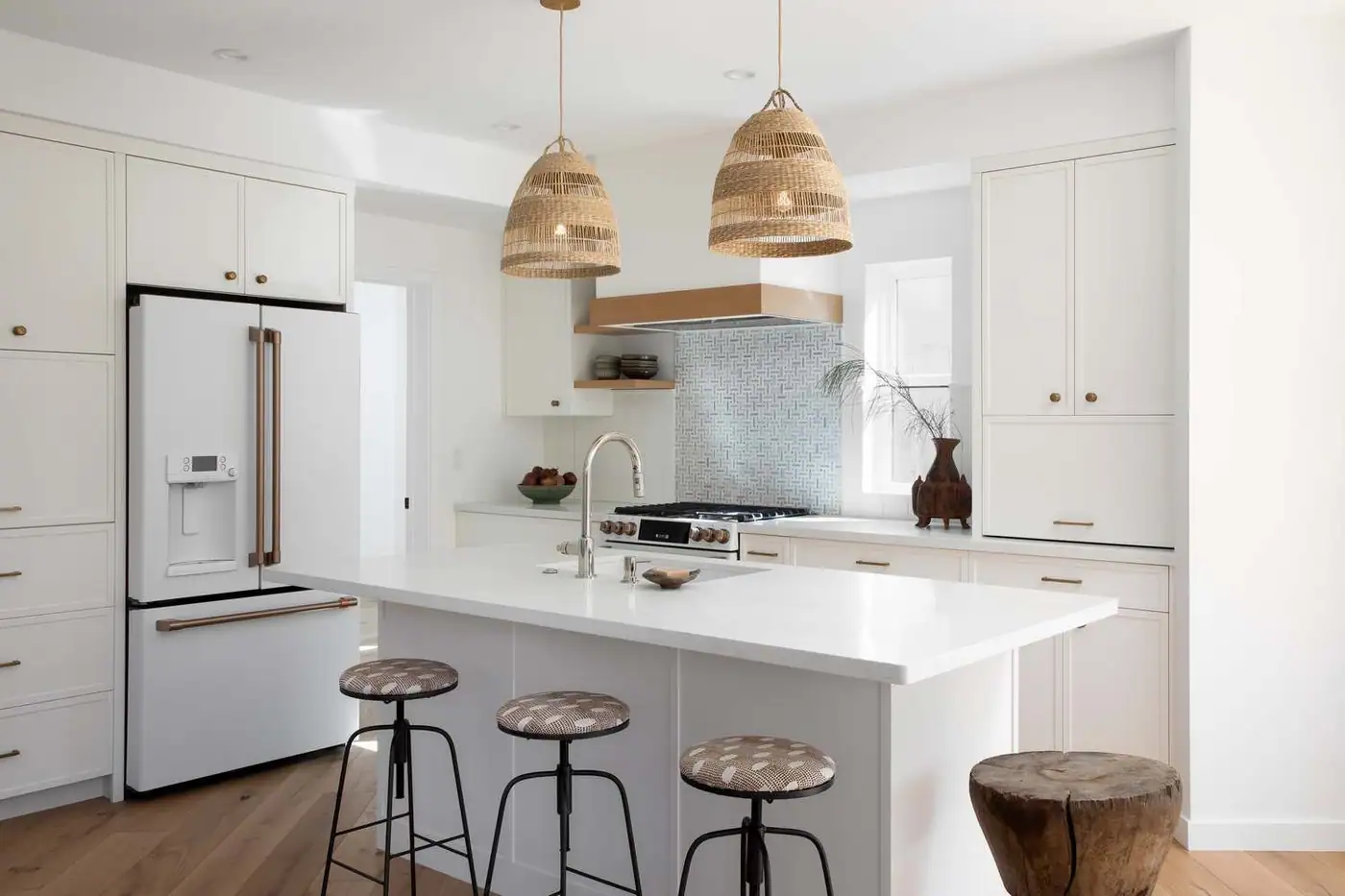
Think about where the hours go on the kind of work we do. A kitchen remodel in Santa Cruz County involves demolition, structural modification, plumbing rough and finish, electrical rough and finish, mechanical, insulation, drywall, tile, cabinetry installation, countertop templating and setting, paint, and finish carpentry. An addition adds foundation work, framing, roofing, windows, exterior finish and the inspections that go with each stage.
Most of those lines are a trade contract, not a lumber order. When specialty trade pricing moves, it moves the bid. When lumber moves, it moves one package inside one phase.
This is also why two bids on the same drawings can differ more in labor assumptions than in material assumptions. The materials are largely knowable. The hours, the sequencing, and whether a trade is available in the window your project needs are where the judgment sits.
The Santa Cruz County part: a small trades pool
The national split lands here in a specific way, because the local trades market is tight and small.
In October 2026 the Santa Cruz and Watsonville area had 4,900 jobs in mining, logging and construction, down 2.0 percent over the year, while total nonfarm employment rose 1.2 percent to 103,000. The Bureau reports construction combined with mining and logging in this area. Total employment growing while the construction trades shrink is the shape of a tightening labor pool.
Wages reflect the same pressure. In the May 2025 occupational wage data for Santa Cruz and Watsonville, construction and extraction occupations averaged $35.36 per hour locally against $31.42 nationally. That is a local premium on exactly the input that is driving the national construction number.
Fewer trade workers in the county also affects schedule, and schedule costs money. If a plumber or a tile setter can only start three weeks later than planned, the supervision, site protection and equipment on your job keep running during the gap.
Coastal code and review are labor costs, not material costs
Santa Cruz County has review requirements that a national price index cannot show you, and nearly all of them resolve into professional hours and calendar time rather than lumber.
Development in the coastal zone generally needs a coastal development permit. The California Coastal Commission certifies local programs, and once that happens, most coastal development permit authority is delegated so applications are reviewed and acted on by cities and counties, with the Commission keeping appellate authority over specified categories of development.
Locally, the County processes these as a Conditional Use Permit or a Conditional Site Development Permit. "Development" there includes construction, reconstruction, size alteration or demolition of a structure, plus grading and earth material work. Projects have to meet design criteria covering harmonious appearance, minimum grading and tree cutting, suitable landscaping and avoidance of ridgetops. Residents within 100 feet and owners within 300 feet get notice of the public hearing. An approval can be appealed to the Coastal Commission if the project sits in the appeal jurisdiction, which includes development between the sea and the nearest through public road, or within 300 feet of a beach, high tide line or coastal bluff top.
Code edition matters too. The 2025 California Building Standards Code was published July 1, 2025, with an effective date of January 1, 2026. Projects permitted under a newer edition carry whatever compliance scope that edition requires, and that scope shows up in design fees, documentation and inspection coordination.
Fees are their own column. The County itemizes a long list on a residential permit, including zoning plan check, building plan check, permit processing, Public Works drainage, Public Works road engineering review, County Fire plan check, a 7 percent General Plan surcharge and a 6 percent Technology and Facilities Update Fee. The County's own estimator for single family dwellings, additions and remodels warns that it cannot fully cover all variables that may affect the cost of the permit.
How to read your own bid against this
You can check whether a bid matches current conditions by looking at a few specific places.
- The labor and trade subtotal. Compare it against the material subtotal, and ask which lines the 1.8 percent monthly move in construction prices touches.
- General conditions. Supervision, site protection, dumpsters, temporary power and cleanup run on calendar time. A longer review period raises them even if nothing about the scope changes.
- Allowances. Cabinets, tile, fixtures, countertops and appliances are often allowances rather than fixed prices. A lumber decline does nothing to these, so ask how each allowance was set and whether the figures match the selections you have in mind.
- Permit and consultant lines. Ask whether fees are carried as an estimate or a pass through, and whether survey, geotechnical or arborist reports are inside the number or outside it.
- Escalation and validity. Ask how long the pricing holds, and which lines are exposed to change. Trade pricing and fee schedules move on different clocks than lumber.
- Coastal review assumptions. If the property is near a bluff or beach, ask which permit path the bid assumes, and what happens to schedule and cost if the project lands in the appeal jurisdiction.
A bid built on today's conditions should show more sensitivity to labor availability and review timing than to the price of framing lumber. If the only thing a conversation about cost touches is material prices, it is describing a smaller part of the job than the part that actually sets the number.
We are glad to walk through a bid line by line with you so you can see which parts are fixed, which are allowances, and which depend on review. For questions about accessory dwelling units specifically, see the ADU journal at santacruzadu.com.
Sources
- Producer Price Index News Release, October 2026 results, U.S. Bureau of Labor Statistics
- Producer price index percent changes and weights for Final Demand and Intermediate Demand groupings, Table 1, U.S. Bureau of Labor Statistics
- Santa Cruz Area Economic Summary, Western Information Office, U.S. Bureau of Labor Statistics
- Occupational Employment and Wages in Santa Cruz and Watsonville, May 2025, U.S. Bureau of Labor Statistics
- Coastal Development Permits and Appeals, California Coastal Commission
- Coastal Development Permits, County of Santa Cruz Community Development and Infrastructure
- Fees Associated with Your Residential Permit, County of Santa Cruz Community Development and Infrastructure
- Residential Building Permit Fee Estimator, County of Santa Cruz Community Development and Infrastructure
- California Building Standards Code, Division of the State Architect and Building Standards Commission, California Department of General Services